


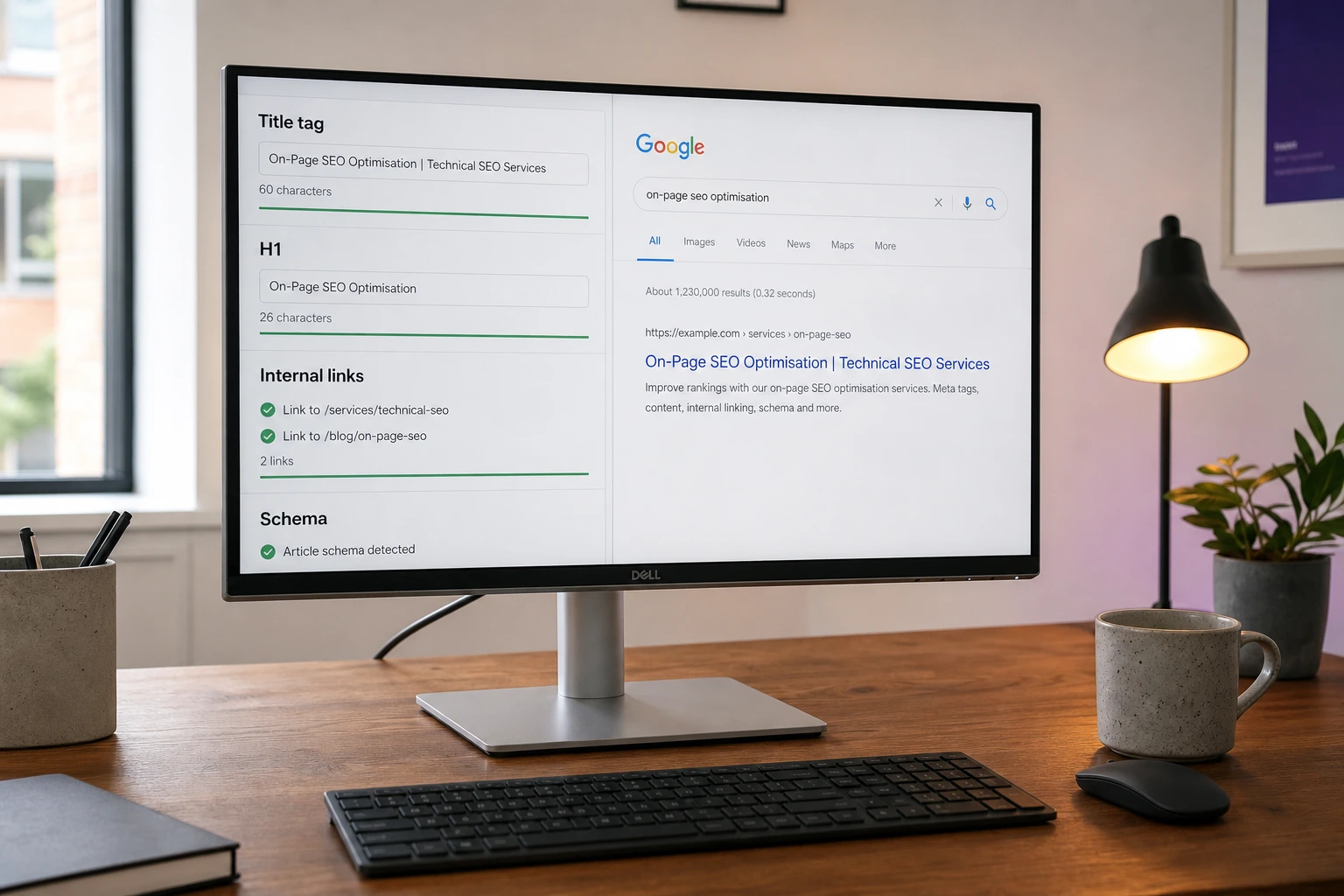
On-page work is the least glamorous part of SEO and often the most profitable. Page titles that describe the page instead of the brand, headings that follow the question a searcher asked, internal links that tell search engines which page matters — none of it is complicated, and most sites still get it wrong.
We rewrite the elements that decide how a page is understood, then wire the pages together so authority reaches the ones you care about. On sites with existing traffic, this is usually where the first measurable movement comes from.
The elements we rebuild
Every change is tied to a target query from the keyword map, so there is a reason behind each rewrite rather than a preference.
Titles and meta descriptions
Written to match query intent and to earn the click, then measured against click-through data rather than opinion.
Heading structure
One clear H1 per page and a heading hierarchy that follows how the topic is actually searched and read.
Internal linking
Contextual links from your strongest pages to the ones that need support, with anchor text that describes the destination.
Content depth and coverage
What the ranking pages answer that yours does not — added properly, not padded out to hit a word count.
Structured data
Schema that matches the page type and is valid, so you are eligible for the richer results in your category.
Templates, not just pages
Where a problem lives in a template, we fix the template — one change that improves hundreds of pages at once.
5

- the number of priority issues we fix first, ranked by impact
What you actually receive
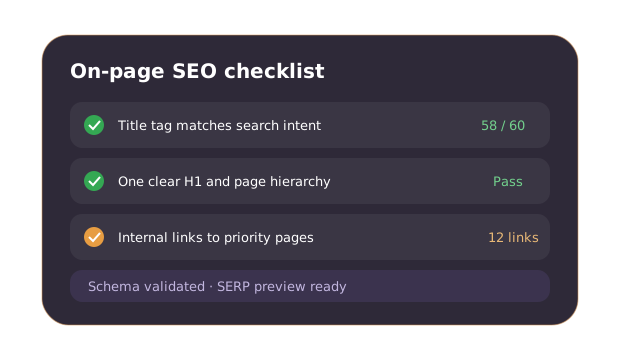
You get the changes, the reasoning and a way to keep the standard in place after we finish.
- Rewritten titles, descriptions and headings for priority pages
- An internal linking plan with the specific links to add and where
- Content gap notes per page, written as briefs your team can execute
- Structured data implemented and validated
- Template-level fixes specified for your developers
- An on-page checklist your team uses for every new page from then on

Faster movement than new content
Improving a page that already ranks on page two is usually quicker than earning a position with something brand new.

Compounding structure
Internal links and clean templates keep paying off for every page you publish afterwards.
How on-page work is delivered
In batches, starting with the pages closest to a meaningful position, so you see movement while the longer work is still in progress.
Implementation

We work through pages in priority order, in batches small enough to review properly. Where you have a CMS we can work in, we make the changes directly; where changes need engineering, we write specifications with before-and-after examples so nothing is lost in translation. Each batch is tracked separately, which means we can see which types of change are working on your site and adjust the rest of the queue accordingly.
after title, structure and internal-link updates
A note on timelines and pricing
Meaningful ranking movement usually takes three to six months, because search engines need time to crawl the changes and reassess the site. We'd rather say that now than surprise you in week six.
There are no fixed packages here. Scope, effort and price are agreed after we've looked at your site — send a request and you'll get a proposal built for your situation.
Frequently asked questions
No. We start with the pages where the effort has the clearest return, then extend the same standard outwards.
Never without agreement. Titles and headings need to match search intent, but the voice stays yours.
Batches are tracked against position and click-through data for the target queries, with a baseline captured before anything changes.
That is the intention. The checklist and briefs exist so the standard survives without us.
