


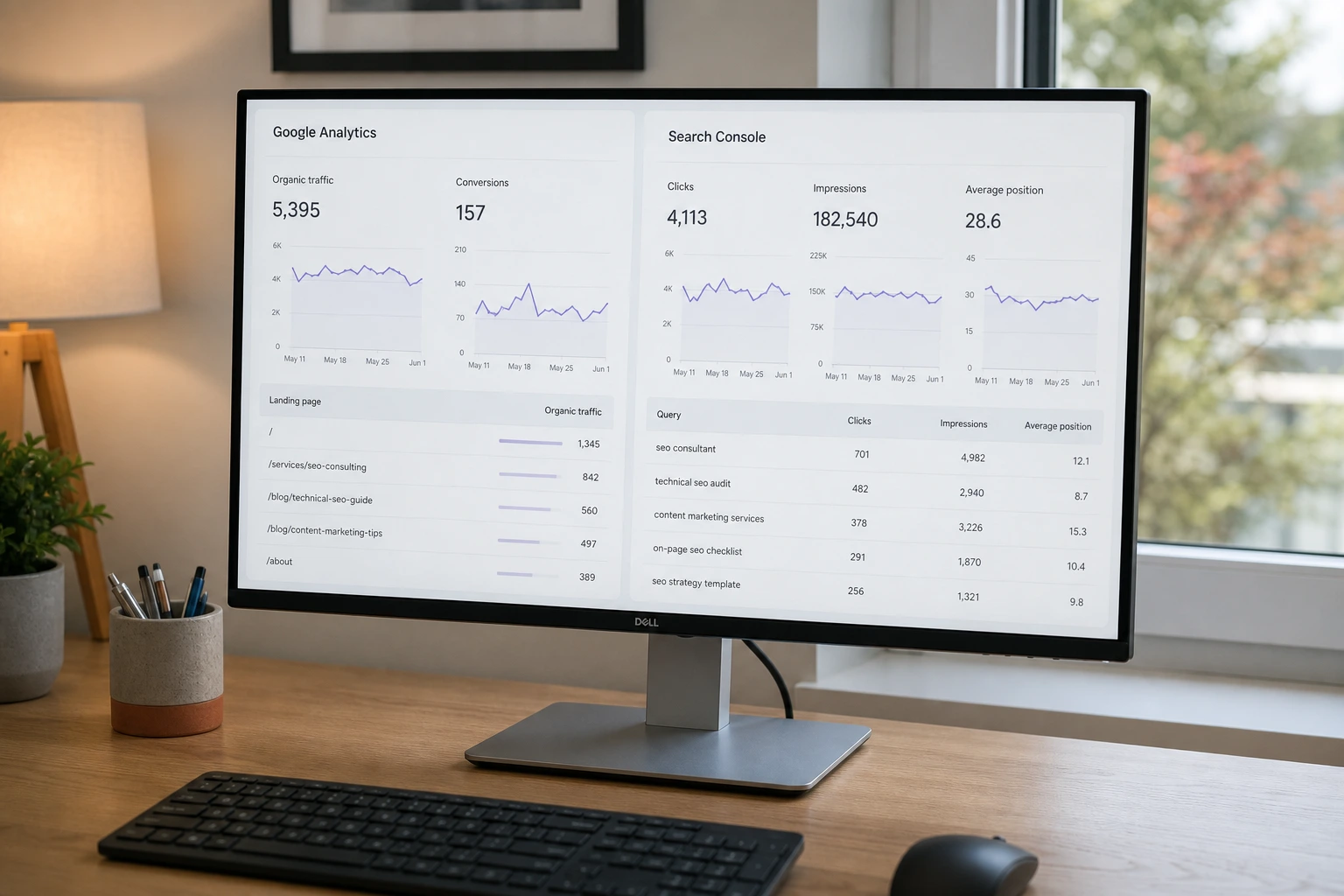
If you cannot measure it properly, you cannot tell whether the last three months of work were worth the money. And a surprising number of SEO reports are built to look impressive rather than to answer that question.
We fix the tracking first, then report on the handful of numbers that should influence a decision. Every report ends with a short written read-out: what moved, our best explanation for why, and what we are doing about it next month.
Measurement that survives scrutiny
Reporting is only as good as the data behind it, so the setup work comes first.
Tracking audit and repair
Analytics configuration, conversion events, filtered internal traffic and the double-counting that quietly inflates every report you have seen so far.
Search Console integration
Query-level data joined to landing pages, so you can see which pages earn which impressions rather than guessing.
Rank tracking that reflects reality
Tracked by device and location, segmented by intent, because a national average position hides everything that matters.
Attribution, honestly framed
Organic search rarely gets full credit or deserves none. We show assisted conversions without pretending the model is perfect.
A dashboard people open
One page, the metrics that drive decisions, refreshed automatically and readable by someone who is not an SEO.
Monthly written read-out
The part that matters: what changed, why we think it changed, and the plan for the coming month.
12,000+

- keywords tracked across the accounts we currently report on
What you actually receive
You keep everything. The dashboards, the tracking setup and the documentation stay with you if the engagement ends.
- A tracking audit with every issue found and fixed, documented
- Conversion and event tracking configured for the actions that matter
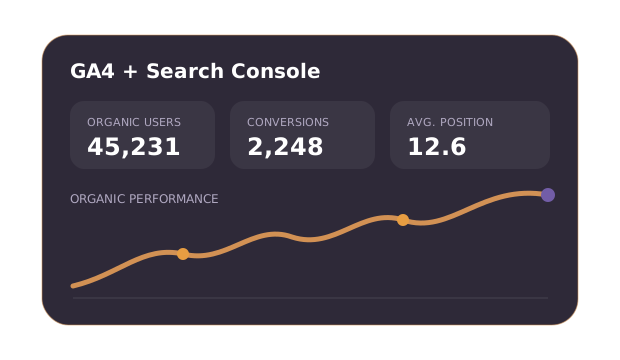
- A live dashboard covering rankings, traffic, conversions and crawl health
- Monthly reports with a written explanation, not just charts
- Annotations for every significant change, so future drops have a history
- A quarterly review session with whoever needs to see the numbers

Decisions, not decoration
If a number on the dashboard cannot change what we do next month, it does not belong on the dashboard.

A record you can trust later
Annotated changes mean that when something drops in eight months, you can trace what happened rather than speculate.
How reporting works
Setup takes one to two weeks. After that it runs monthly, with a deeper review each quarter.
Reporting rhythm

Monthly reports are deliberately short — a page of numbers and a page of explanation. Quarterly reviews go deeper: what the strategy assumed, whether the data supports those assumptions, and what should change in the next 90 days. This rhythm exists because SEO moves slowly enough that a weekly report mostly measures noise, and reacting to noise is the most common way to undo work that was about to pay off.
after clean event and attribution setup
A note on timelines and pricing
Meaningful ranking movement usually takes three to six months, because search engines need time to crawl the changes and reassess the site. We'd rather say that now than surprise you in week six.
There are no fixed packages here. Scope, effort and price are agreed after we've looked at your site — send a request and you'll get a proposal built for your situation.
Frequently asked questions
Whatever you already pay for, wherever possible. Search Console and your analytics platform cover most of it; rank tracking and crawling tools sit on top.
Yes. They are built in your accounts, and the documentation is yours.
Yes, and it is usually worth it — organic and paid affect each other, and looking at them separately hides that.
We diagnose before reacting: tracking issue, seasonality, algorithm update or something we changed. The annotation history makes that far quicker.
